šŸŽ‰ Join Me for World Sketchnote Day 2025!

Hi,
I’m thrilled to invite you to āœļøWorld Sketchnote Day 2025, happening online on January 11th!
This is your chance to dive into the art of sketchnoting, a powerful way to capture ideas visually, and connect with a global community of creatives.


✨ What to Expect:
ā— Pre-recorded talks from inspiring sketchnoters (including me!) to sharpen your skills
ā— Exciting giveaways
ā— Opportunities to showcase your sketchnotes in the chats and be part of the fun
🚨 EXCLUSIVE! This year, we’re also offering a ⭐VIP Sketchnote Super Pack—packed with goodies to level up your skills at an unbeatable price!
Learn more and SAVE your spot now and get ready to tune in, learn, and create: https://sketchnote.school/wsd/


I can’t wait to share my session about finding inspiration for a visual library from nature with you and celebrate the magic of sketchnoting together.

Let’s make this year’s āœļøWorld Sketchnote Day unforgettable!

See you there,
Kirsten

The Joys of Urban Nature Journaling

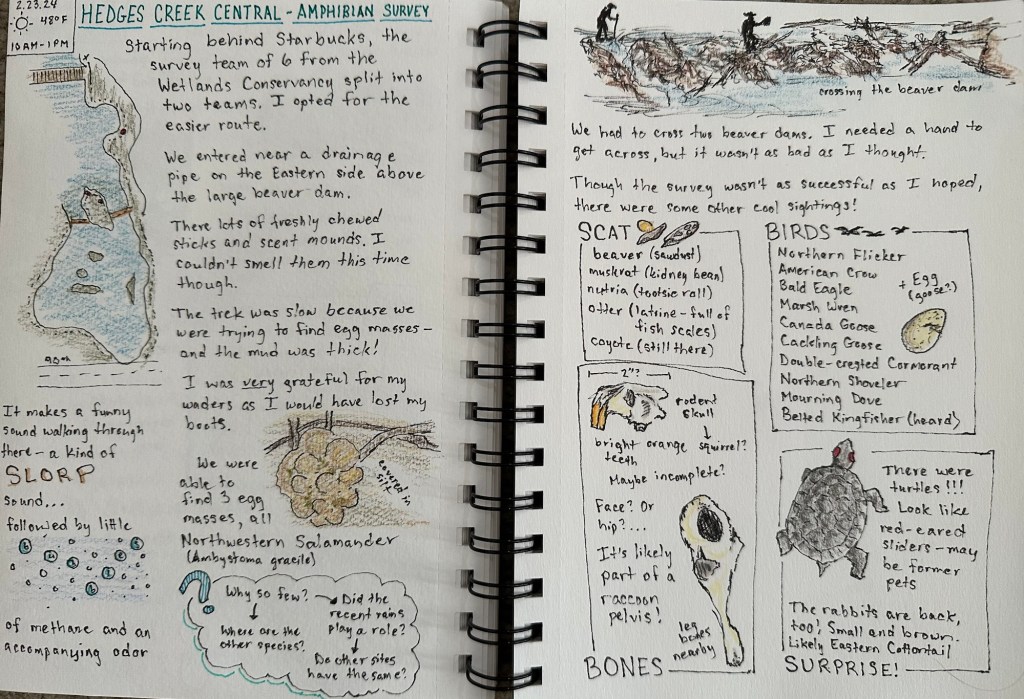
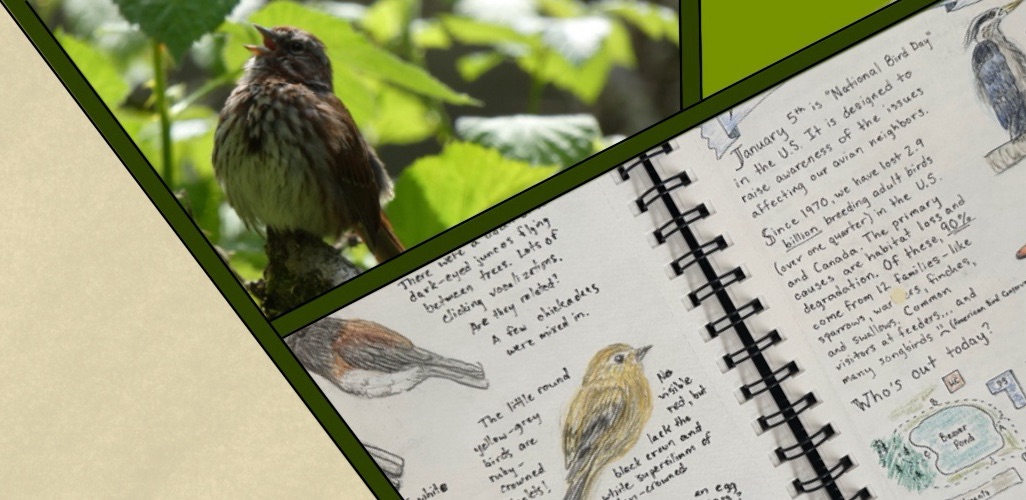
A geometric design showing areas of parchment pattern, a green triangle, a song sparrow singing, and an excerpt from a nature journal page.

For a lot of people, I think there is an illusion that “nature” is a place out there – away from where we live, work, and play regularly especially if we make our home in a city. And I will be the first to admit that for many years, I felt this way too. That “nature” was something I traveled to find in a state or national park on summer vacation. My nature journaling practice was confined to pages I would create while on these trips. But one of the things that has brought me the most joy over the last few years has been discovering the nature around me and my home.

Finding the Nature Nooks

One of the most important things you can do for your nature journaling practice is to get in some pencil miles (practice). And the best way to get that practice is to do it regularly. For me, finding spots that I could easily visit over and over again helped make my pencil miles – and my journal – more meaningful. I started calling them nature nooks because some of them are small little areas of greenspace where I can watch as the world changes through the year. I am lucky to live in an area where park space is plentiful (I can walk to several parks within 10 minutes), but for over 100 million people in the US, they don’t have greenspaces within a half mile of their home. Part of me hopes that as more people discover the benefits of time in nature, programs to help support more of these outdoor spaces for everyone will become a priority.

This is where nature nooks come in. Try as we might, nature will always find its way in. So look for it around you:

  • in the birds sitting and singing or flying between trees or buildings
  • in the trees that change with the seasons and those that don’t
  • in the flowers or mosses that make homes along sidewalks

In general, I would say look for the green things. There are amazing things that you can begin to notice.

Put It Down

And once you find your nature nook(s), then it is time to start journaling about it. As I have discussed in previous posts, there is no right or wrong way to nature journal. Every single entry is different because you are capturing a unique experience from your viewpoint – no one else’s. Start where you are comfortable – write about what you see or what you hear, draw the outline of the shape of a new leaf you noticed, or count the number of birds you saw while on an outing. Then the next time you go out, do it again, but with a little more detail. Look a little more closely or even look at the big picture. Record the things that you notice and that stand out to you…the questions you wonder about…the past experiences or ideas that they remind you of. Because your nature journal is about you – your experience of the world around you and all of its beauties, big or small

Share About It

Now I know I JUST SAID that your nature journal is just for you… and that is true. But one thing you should be prepared for if you nature journal in your community is for people to ask you about it. Most often, they might ask what you are drawing. But, a lot of people may ask other questions like how do you do that…what have you seen lately…what tools you are using…and more. When I first started journaling outside, I was not fully prepared for it (I always described myself as shy and am still battling my inner critic and its overprotectiveness). But the more I did it, the more I actually enjoyed chatting with people. Sharing nature journaling with them. Sometimes, you can even get some cool information about other interesting plants and animals in the area. My hope as a nature journal educator is that maybe seeing me journal or chatting for a few minutes might inspire someone else to give it a try -which someday leads someone else to start nature journaling and spending intentional time in nature. Because deep down, nature journaling is about making connections – within ourselves, with the incredible world around us, and with one another.

Want to hear more? Check out my interview about my experiences with urban nature journaling on Marley Peifer’s The Nature Journal Show https://youtu.be/uSGetR-05JA?si=u3L97Hu0qDUjivFW .

Why I Nature Journal…

Before I begin this post, I want to take a moment to acknowledge that the reasons described below are very much my own. They are not by any means universal, but I thought I would take some time to share why the practice of nature journaling is so important to me.

First, I should probably set the stage a little. I have been doing some form of nature journaling since around age 6. It definitely was not the type of nature journaling I do now and was heavily focused on trips to “outdoor” travel locations, but it was my first real foray into nature journal pencil miles. I didn’t start nature journaling as I do now until maybe 2022, which is likely related to why the practice became so important to me. Below are the top 3 reasons that I nature journal

Reason #3: A way to stretch my scientific muscles

I have always wanted to be a scientist. As a preschooler, I was already firmly committed to the idea of becoming a paleontologist (before the first Jurassic Park movie was released). My science courses were always my favorite in school, though I became more fond of math as I got older, and eventually I majored in general science in college because I couldn’t narrow down to a particular focus. Even during my work in the classroom, I always enjoyed attempting to analyze and problem solve my way through the world of education.

Deep down, I think it is because curiosity is a key part of who I am. I genuinely enjoy asking questions and trying to find the answer – though the older I get, the more open I am to not immediately finding the answer. I find joy in seeking the answers for myself in what I see around me. And as a math teacher, I actually think it is cool to collect data and try to discern the patterns in it. Sometimes I can… and other times I find that there is just another question waiting around the corner. Either way, nature journaling provides me with an authentic way to stretch my scientific muscles.

More recently, I have been learning about using nature journaling in combination with technology to collect data as a citizen scientist. While I may not work in science professionally, the data that I and other citizen scientists collect and share can be valuable nonetheless. There is not nearly enough funding available to support research into the changes occurring around the planet in the plants and animals that we share space with. But using programs like eBird and iNaturalist can help me and others get a clearer sense of the natural world around us, including valuable data that scientists can use.

Reason #2: A creative outlet and pencil miles

Probably a side effect of my curiosity, I love to be creative and find new ways to capture things. Telling stories and writing poetry gives me a way to record my thinking in words. Trying to find ways to clearly describe what I see and hear and smell stretches my vocabulary and communication skills. Currently, I have a lot of fun trying to describe bird calls that I hear.

For a long time, I didn’t draw much because I compared my art a lot to other people’s. In high school, I had a tough time in an art class because I wanted to do fewer pieces well than more pieces that were less well done. I had not yet become aware of the idea of pencil miles – that to get better at drawing, you have to draw. A LOT. Now, I try to draw at least once a week. Sometimes, it is digital, sometimes it is physical media. Either way, I have also learned the importance of learning from other people. Artists aren’t born – they practice! And the more I have practiced, the more my artwork looks the way I want it to.

Which is not to say that I don’t make mistakes, but that I can now see them more as part of the learning process. This was an idea that I used to tell my math and science students all the time, but had a tougher time telling myself. In the last couple years, I have really started to believe in it though. It also helps me learn what works for me and what doesn’t. Every naturalist/nature journaler’s bag will look different – and that is part of the beauty of the process.

My Reason #1: being present

The first two really aren’t in a particular order, but this is 100 percent the top reason nature journaling is important to me. In my personal and professional life, I fell into the easy trap of “busy”. The work of a teacher is a lot and combining that with being supportive of my family and friends meant that I didn’t make time for me… or rather felt I couldn’t. I spent a lot of time and money trying to learn new technologies that I hoped would give me an edge.

But when everything shifted in 2020 and I was in front of a computer screen for hours and hours, I didn’t want to be on a computer as much anymore. So I would get outside. Walk around my neighborhood or on a local trail. And the more I got outdoors, the more I wanted to be outdoors and to slow down. I would spend hours on short walks. I started to notice things around me more, when flowers would bloom, mushrooms would pop up, or just how many different kinds of birds lived within walking distance of my house.

My nature journal became a place for me to record the things I was seeing, whether for the first time or maybe just a little more clearly. It gives me a place to write the questions I have and the connections I make. And to capture these thoughts, ideas, and images more clearly in the field, I had to learn to take my time and be really present with the world in front of me – not as I thought it to be, but as it truly is. Which to me has been the most powerful lesson nature journaling has taught me so far and one which I have tried to bring more into other aspects of my life.

The unexpected twist was the effect it had on my health. Though it was by no means a magical overnight cure, getting outside and not rushing everywhere decreased my stress levels. I was able to sleep better. My heart rate was not as high all the time and my blood pressure started to go back to normal. I found myself more full of joy and hope. And those have been some of the greatest surprises of all.

Closing Thoughts

As I mentioned in the opening, everyone’s experience and reasons for nature journaling are unique. I think deep down it is rooted in the need for connection. To connect meaningfully with the world around us… to connect to ourselves on a deeper level… and to connect to each other. The people I have met through the nature journaling and naturalist communities have truly shaped me into a better person. And I know that journey is just getting started.

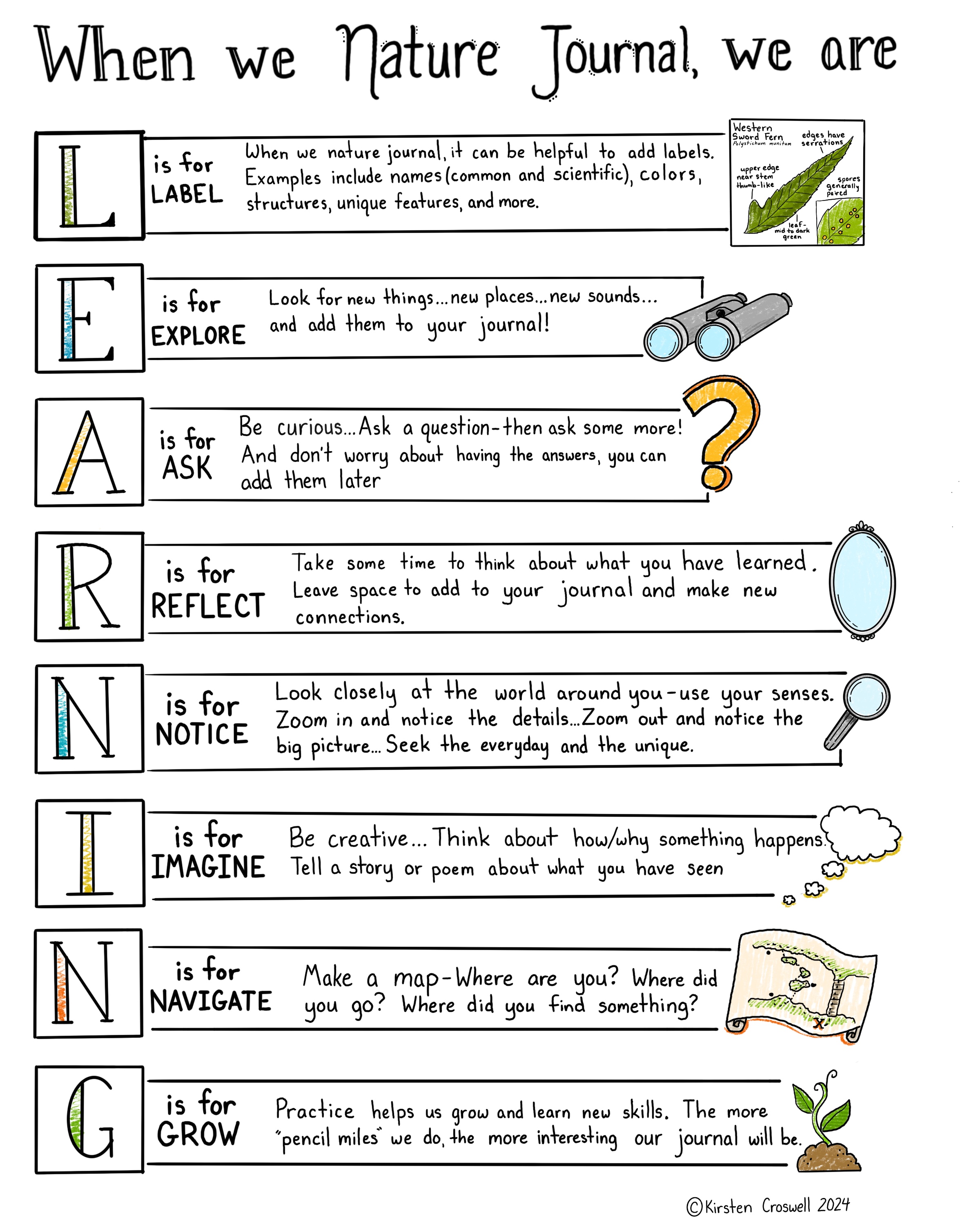
Nature Journaling is LEARNING!

Welcome back nature journalers! In this week’s post, we explore an acronym to help us remember different ways we can approach our nature journaling practice. So let’s dive in!

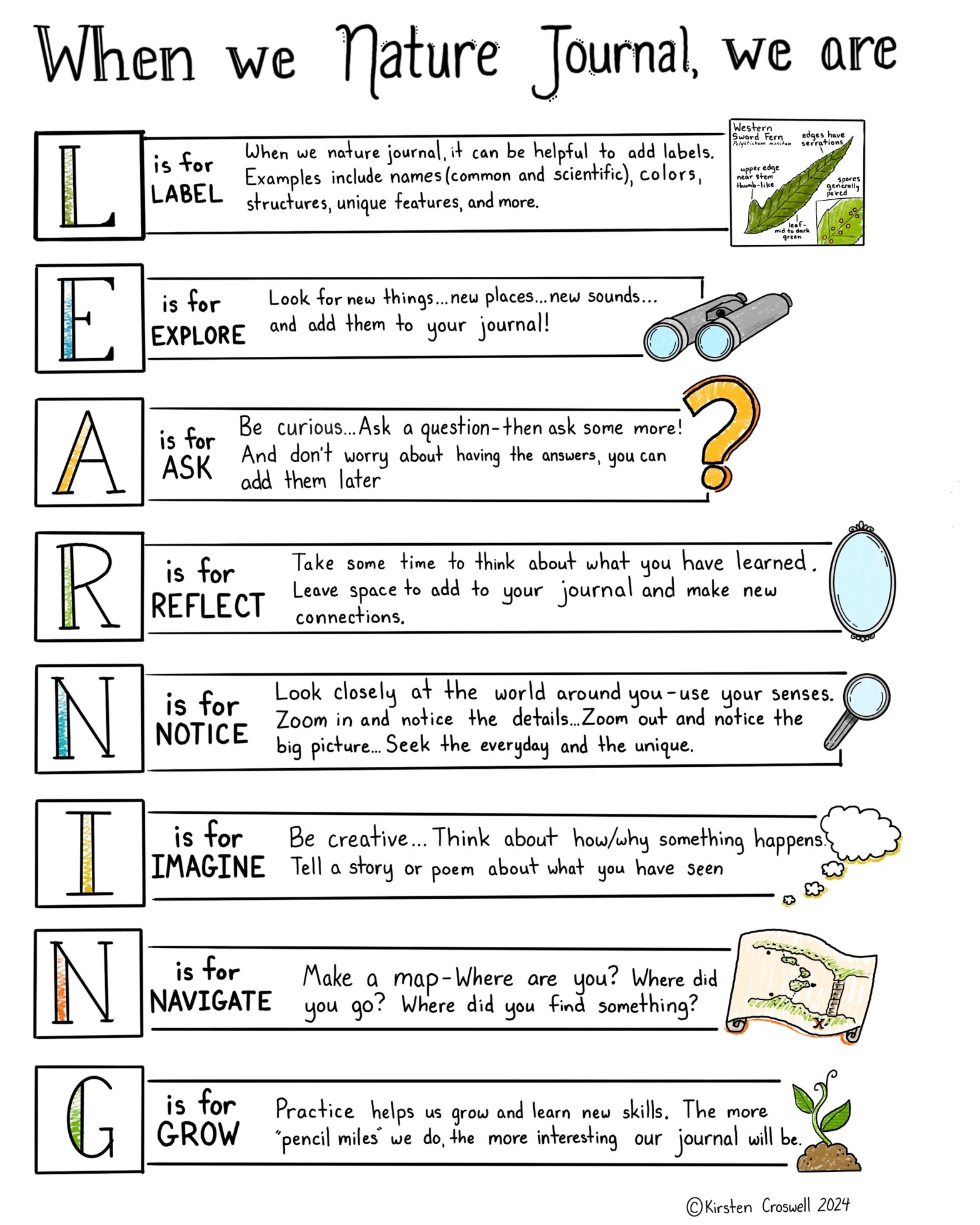
When We Nature Journal, we are LEARNING!

In my ongoing quest to find fun acronyms for activities (as a classroom teacher, I love a good acronym), I wanted one that captured a lot of the ideas from nature journaling in a short form. After spending some time -probably more than I should have – I stumbled upon one that I liked. I promptly jotted it down in a Notability document…and then just as promptly forgot where I had written it. Thankfully, I was able to find it again.

L – Label

E – Explore

A – Ask

R – Reflect

N – Notice

I – Imagine

N – Navigate

G – Grow

I plan to create a future blog post series about each of these in more depth, but in the mean time I created a handy graphic (you can download your own copy at the bottom of the page) with the explanations below.

L – is for Label

When we nature journal, it can be helpful to add labels. Examples include names (common and scientific), colors, structures, unique features, and more.

E – is for Explore

Look for new things…new places…new sounds… and add them to your nature journal!

A – is for Ask

Be curious…Ask a question – then ask some more! And don’t worry about having the answers, you can add them later

R – is for Reflect

Take some time to think about what you have learned. Leave space to add to your journal and make new connections.

N – is for Notice

Look closely at the world around you – use your senses. Zoom in and notice the details…Zoom out and notice the big picture…Seek the everyday and the unique.

I – is for Imagine

Be creative…Think about how/why something happens. Tell a story or poem about what you have seen

N – is for Navigate

Make a map – Where are you? Where did you go? Where did you find something?

G – is for Grow

Practice helps us grow and learn new skills. The more “pencil miles” we do, the more interesting our journal will be.

What LEARNING looks like

As I mentioned before, I plan to discuss each of these approaches in more depth in later posts. I also hope to talk more about my own journey as a nature journaler and what these practices look like for me. My goal is to find opportunities to bring nature journaling to more members of the community, whether that is in the classroom, in partnership with community organizations, or some other format I haven’t tried yet. I think that nature journaling can be a powerful for tool for helping forge much needed connections within ourselves, with others, and with our environment.

If you’d like your own copy of the graphic (please make sure you give credit!), click on the download link below.

Getting Started With Nature Journaling – Bonus Post #2: My Favorite Tools

Hello again nature journalers! In the previous post, we talked about some helpful hints for nature journaling including some amazing resources in the nature journaling community. Today, I’m going to dive in and show you a few of my favorite tools for creating my entries in my nature journal. So without further ado, here are a few of my personal favorites and why.

These are a few of my favorite things…to nature journal with!

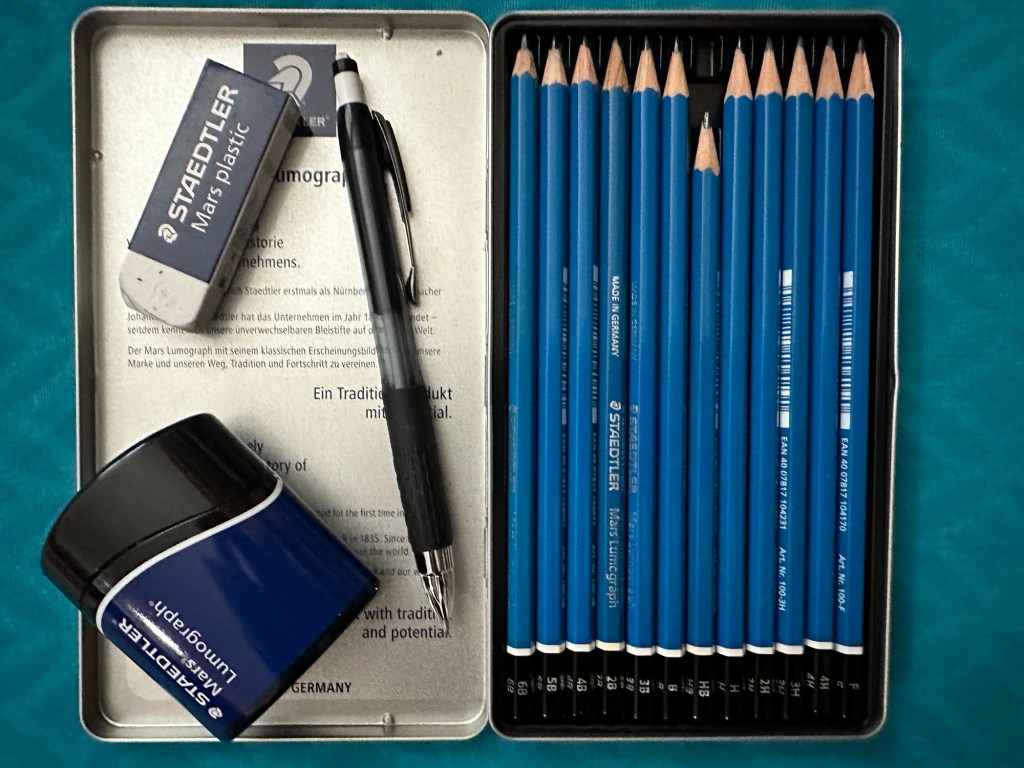
Graphite Pencils

A lot of the base work in my journal is done in graphite. Bet you can guess which one I use the most!

When I first learned to draw with more detail in high school, I used a graphite pencil set similar to the one shown above. I still do a lot of work in graphite, especially when blocking out a drawing (though I’m using a non-photo blue pencil more these days than previously). I tend to carry an HB graphite pencil with my kit, though in my micro kit I use a mechanical pencil with 0.5 lead. Occasionally I will swap other pencils in or a bring a couple options with me. You don’t have to get fancy though to nature journal. I have also taught lessons where I used a basic Ticonderoga and it worked just as well for what I was doing. I currently prefer Staedtler pencils and often bring a separate eraser in case I need to fix something.

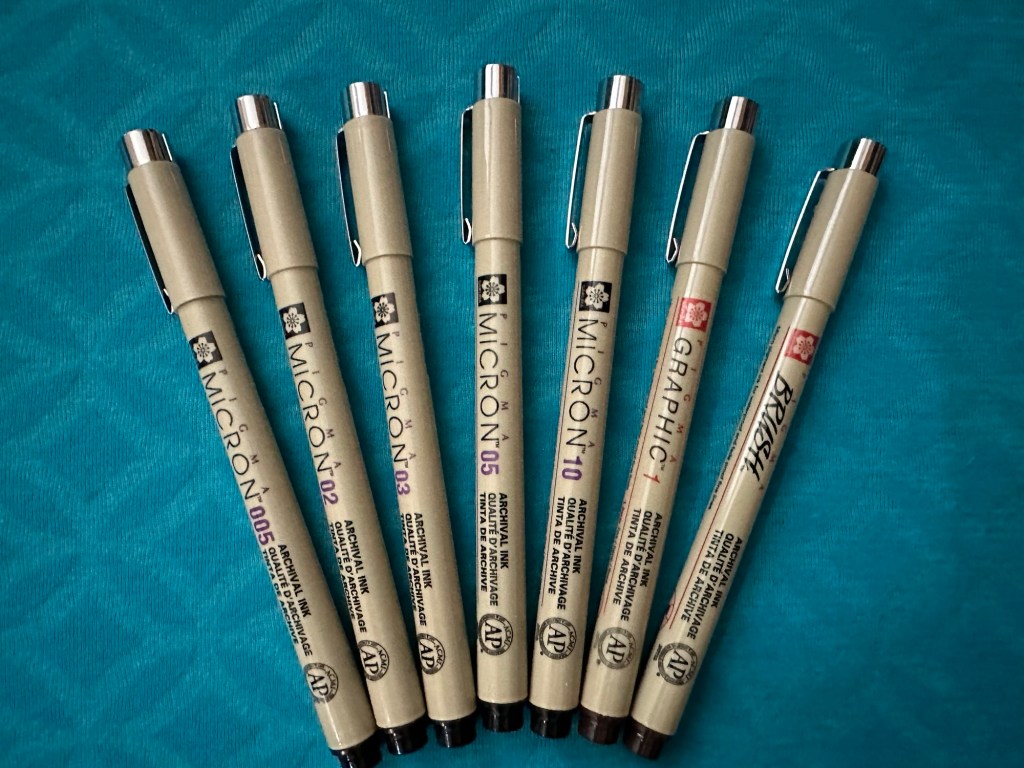
Pens

Micron pens are another favorite. I use these almost as much as my pencils.

Most of the ink work I do is with Micron pens. I use them a lot for lettering, adding detail, and emphasizing outlines. I most often use the 005, though the 02 and 03 are also commonly used. I recently discovered that these pens are also available in colors and have bought a basic set in light gray, dark gray, and sepia, so I am looking forward to trying those out soon.

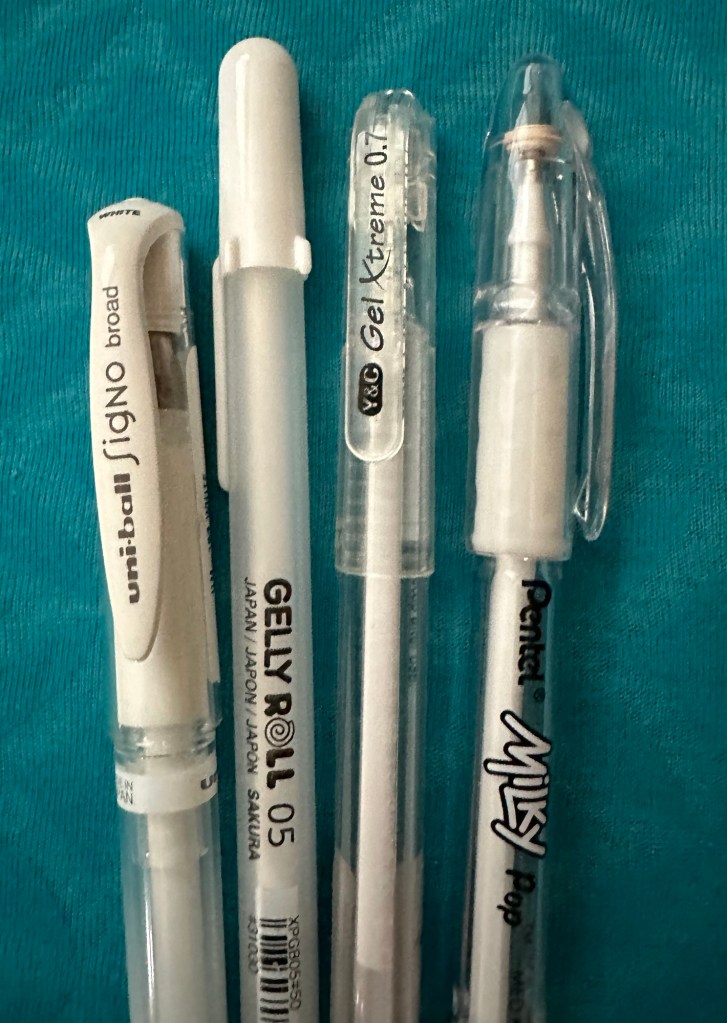
I sometimes use a variety of white pens to add details to eyes or wings in sketches.
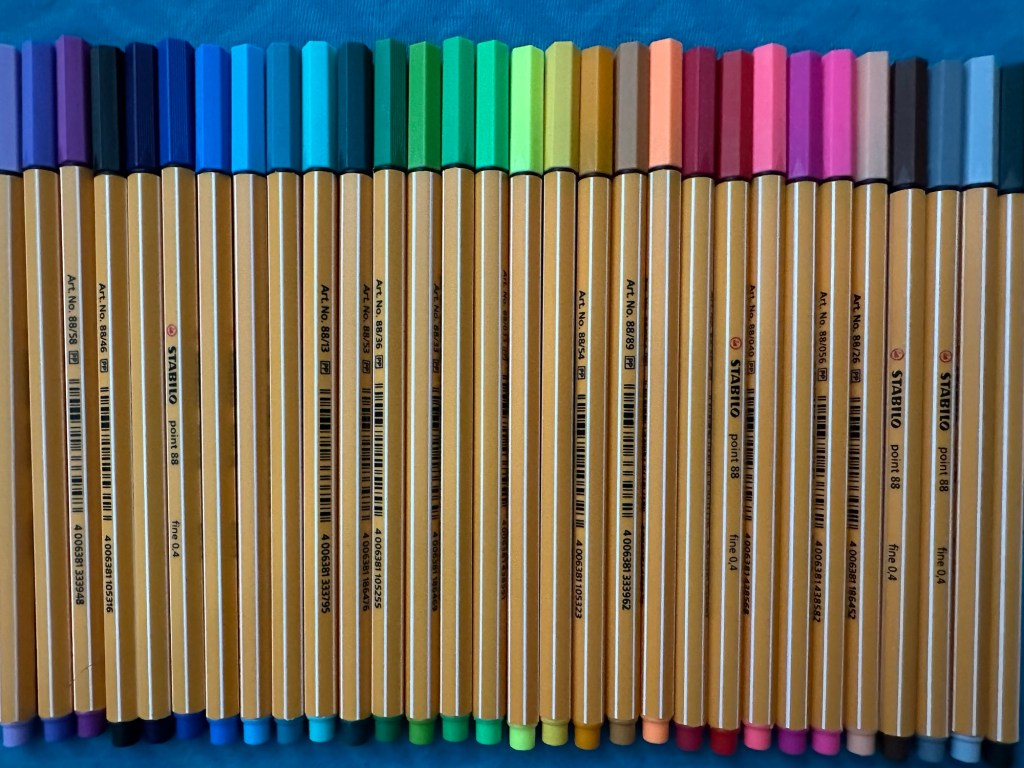
I have a lot of different colorful pens, but the Stabilos are my go to when traveling because they come in so many different colors and have a very fine point.

While I don’t use colored ink as often as pencil, I do find it adds a nice pop. My current favorite are my Stabilo pens as they have a very fine point and come in so many colors. But I also have some fudenosuke pens, pentel inkjoys, and others that I use for other work. I also have several white pens (pictured above) that I use the add back detail like white spots in eyes or on wings. I like having a variety of point sizes in these as well so I can choose the one that best fits my drawing.

Colored Pencils

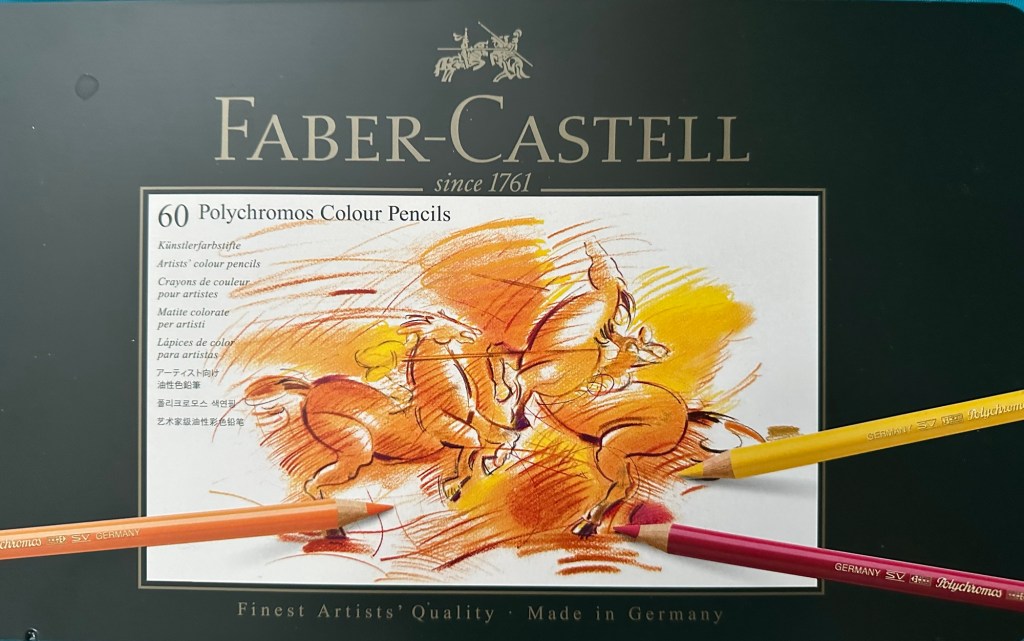
Currently I have 60 colored pencils. I might need more.

A lot of the color work I do in my nature journal is colored pencil. Mostly because I am impatient with letting paint layers dry (working on it). My current set is the Polychromos 60 set by Faber Castell. I find they layer really well and I can slowly build up the color. They also blend pretty decently. In the past, I have also used Prismacolors, but didn’t find the color worked as well for me – this could totally be user error though. I would love to continue to explore different colored pencil types, though the storage aspect is a bit tough.

Paints

Trying my hand at watercolors

More recently, I have started to try watercolors. I started with a pocket set by Koi that included a waterbrush. I am still working on technique to build the color and am limited by my brush choice. But during late 2023, I discovered the paintstones made by Beam Paints, which are made from more natural and eco-friendly sources. I used them for a project during the holidays and the pigment was really nice and strong without having to use much. One of my goals for 2024 is to try painting more.

Papers

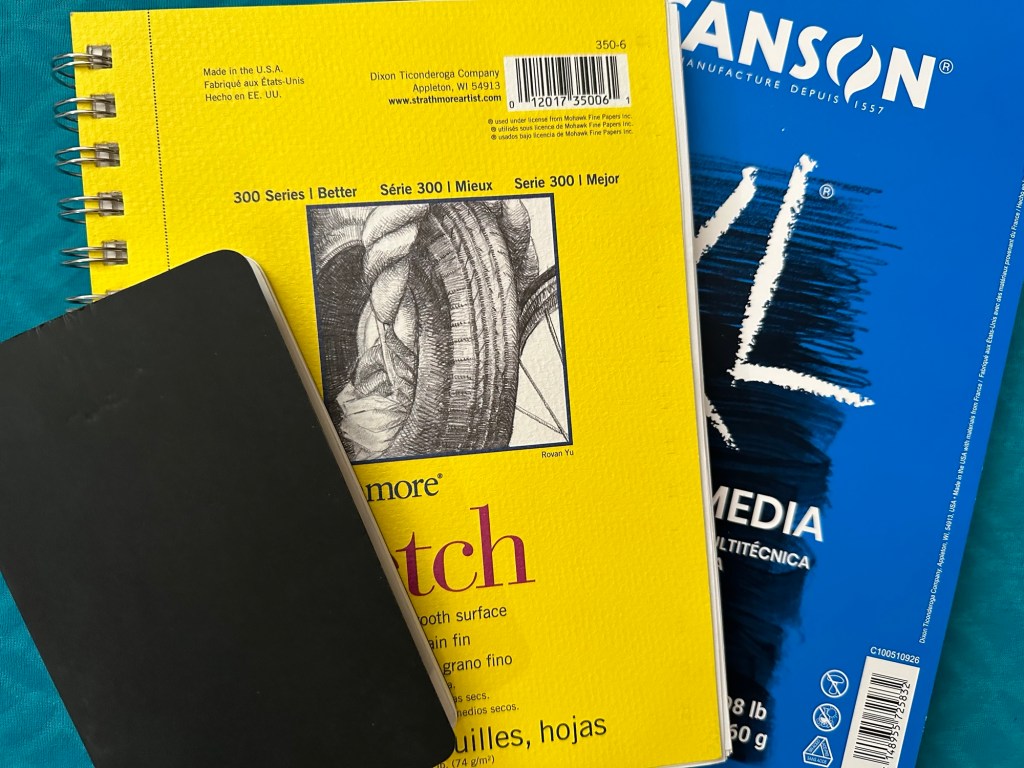
Micro, Mini, and Macro – a journal for all occasions

Confession – I have A LOT of journals, but I really only use three of them. The smallest is a little Moleskine blank that I carry in my purse with a mechanical pencil. It doesn’t take up much space and allows me to capture an entry quickly anywhere. Most of my nature journaling in my mini journal, though I have a second one with sketch paper (pictured). I mostly use mixed media paper so I can use wet media if I want, though it is still not a regular part of my practice. I do have a larger size journal, but that one never goes out in the field. My current large journal is actual more of a personal textbook for the Oregon Master Naturalist program I am attending. It is nice to get some pencil miles in, while learning new things about Oregon ecology.

Carrying Gear In The Field

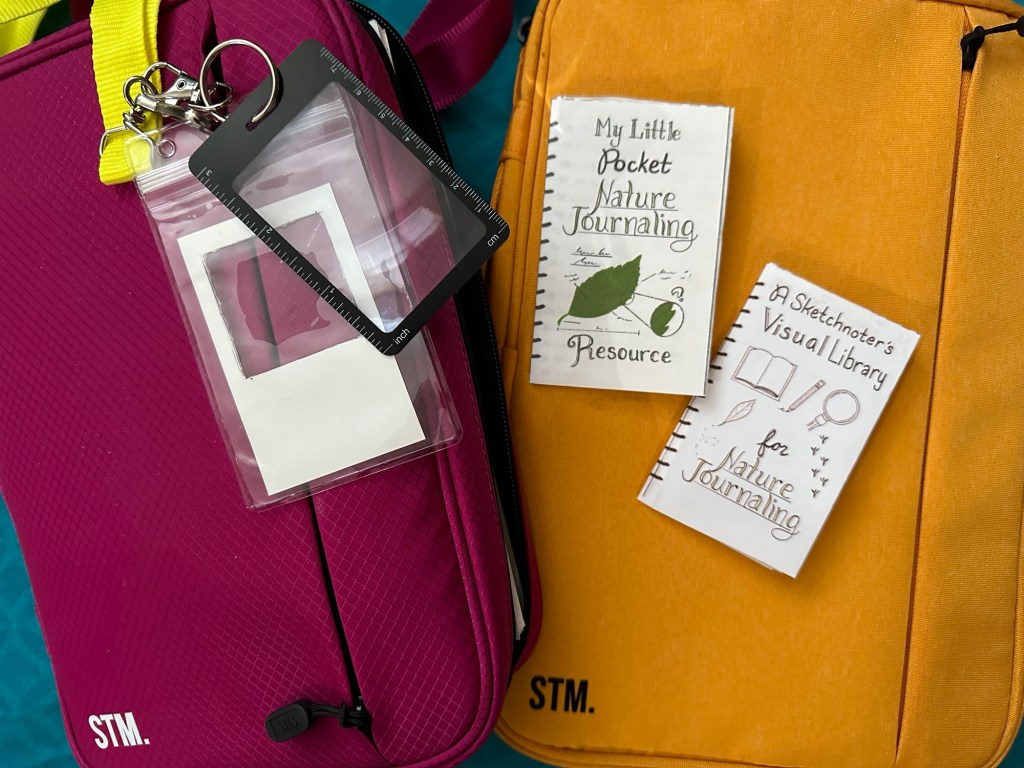
Some of my favorite tools to carry in the field. Including two of my mini-zines

I like having options for when I journal out in the field. The purple STM pouch is the one I use most often and allows me to carry a variety of pens and pencils. Currently it has a lot of greens and browns, but I add a few other colors in seasonally. You can see the inside of it in the image at the top of the post. The larger yellow one I am more likely to use when traveling if I want to have more options available as it can hold a lot more tools.

For measurement tools, I have a few different ones. I started with the Naturalist reference page created by John Muir Laws, which I keep in a pocket in the front of my main journal (more below). It has a lot of wonderful tools in a handy small format. I also carry a magnified/ruler combo and small frame tool on a lanyard tucked in the front pocket of my pouch. I have set of these that I bring to journaling workshops. I do have a digital thermometer and wind gauge that I occasionally bring, but they are a lot more bulky.

I created a couple mini-zines for references as well. The first one covered all the basics of Nature Journaling. My more recent one is a Sketchnoter’s Visual Library for Nature Journaling. This resource was created for a class I was teaching. Note- it is a double-sided resource so be aware when printing. Both are available on this site.

Pocket for holding reference pages, zines, and more.

I love making little pockets. This one was created using a small folded card and some washi tape. I cut one corner off to make it easier to access resources and then taped around the edges. This is where my zines and reference pages hang out when not in use. As I mentioned above, it is in the inside cover of my main journal.

To carry all of these tools (plus other gear), I often use a backpack or hip pack. Most of the time, I carry my kit, a camera, and all of my normal items (wallet, phone, glasses) in a Fjallraven Mini. I do have some larger daypacks that I use if I want to carry more gear. If I’m trying to travel light, I have a couple Cotopaxi hip packs that I use. These are more if I am journaling under more interesting field conditions, like in the wetlands where I might not carry my normal journal, but my micro kit.

Conclusion

As I have mentioned before, you don’t need fancy tools to nature journal. But if you want to add a little flair to your practice, the items I mentioned above are the ones that I regularly use. Please feel free to ask me any questions you might have about any of the tools I mentioned or anything else about nature journaling!

Until next time, happy journaling!

Getting Started With Nature Journaling: Bonus Post – Helpful Hints

So we’ve covered all the basics to get started in the practice of nature journaling. But once you have started, where could you go next? Well look no further than this post!

Helpful Hint #1: Find a Community

With a practice like nature journaling, I find an easy way to improve is to find others who are interested in doing the same. And in today’s modern age, you have the option of either in-person or online platforms to connect with other like-minded individuals. Below are a few of my suggestions:

1. Facebook Groups

If you are a Facebook user, there are a number of phenomenal groups of nature journalers. I am currently a member of several groups, including:

2. Nature Journal Club

If you prefer a more in-person approach, a nature journaling club might be the perfect thing. There is a handy map created by Wild Wonder (more on them later) that shows Nature Journal Clubs around the world: https://www.wildwonder.org/nature-journal-club-map . And if you don’t see one near you, it could be great to start one in your community. Some clubs have regular outings, while others are more infrequent.

3. Wild Wonder Foundation

I could not write this post without giving credit to the organization that helped me rediscover nature journaling. Wild Wonder offers classes, in-person and online meetups, and an amazing annual conference (and now a second one just for educators!). This community absolutely is open to everyone and reflects a wide variety of skills and interests. There is a community calendar with information about upcoming events for all levels. Through the wonders of technology, you also have the option to view recordings of many of the events, though some charge a small fee.

Helpful Hint #2: Find a Teacher

There are a number of fantastic individuals who teach nature journaling (and there is no way I could list them all) – but here are a few folks I’ve been fortunate enough to learn from.

John Muir Laws – I don’t think I could have written this list (or this post) without mentioning John Muir Laws. His work has brought nature journaling to people all over the world, in-person and online. He has written several books and regularly teaches online classes. Attending some of these events definitely helped me become a more confident and comfortable nature journaler.

Marley Peifer – Marley hosts the web series “The Nature Journal Show” on Youtube. If you have a topic you want to learn more about, chances are that there is a show that has talked about it. He also teaches and leads nature journaling outings around the world.

Roseann Hanson – Roseann also does an amazing job teaching nature journaling and leading excursions. If you’ve ever wondered where I got the idea to integrate maps more in my journals, this is where! I also love the way she includes metadata in her entries.

Fiona Gillogly – If you like to ask questions and want to see how to include them in your journal, Fiona’s work is a fantastic model. Her question chains are incredible to read and the accompanying images also add to it. I definitely aspire to ask more questions in my journal in the same way.

Helpful Hint #3: Don’t Be Afraid To Try Something New

As we discussed in a previous post, sometimes it can be easy to get stuck in the muck with your creative practice. When that happens for me, I like to try something new. Seek out a site I have never journaled before. Take a closer look at a plant I’ve walked by hundreds of times. Try adding a new feature to my journal. Or when in doubt – ask more questions!

Each of these always grants me a new perspective and a greater appreciation of the world around me. Continuing to work at the practice of nature journaling gives me the chance to see and record things I might otherwise miss out on – like an egret chasing a kingfisher around a pond or a tiny mushroom growing on a tree.

I hope you have found these tips and resources helpful. May you encounter great wonder out there on your nature journal journey!

Getting Started With Nature Journaling – Part 6: Help! I’m Stuck!

Welcome back to our series on nature journaling! We’ve covered the basics, from what it is, to how to find a nature nook, and all about how to incorporate words, numbers, and sketches. And hopefully you’ve had a chance to try out some new strategies in your practice.

But what do you do when you start to feel a little stuck? Today’s post covers some strategies to help you get out of the muck and back into the joys of a nature journaling practice.

Strategy 1: INIWIRMO

For this post, I had to start off with a classic. This strategy is a big one in the nature journaling community, especially in the work of John Muir Laws, who even has stickers available with some helpful prompts on it on his website.

Beyond being fun to say, it can help us remember something simple to add to our journal.

I Notice… – What do you notice? What stands out to you about what you are observing? Is it the color, shape, location, etc.? Often when we are adding words, numbers, or sketches, we are recording what we notice about something.

I Wonder… – What about your observation sparks your curiosity? What is it? How did it get there? What happens next? This is one of my favorite pieces to add to a journal page because I am very curious by nature and am trying to re-learn that it is okay to ask questions without immediate answers. Sometimes I leave space to answer questions in my journal and other times, I don’t. It can also be fun to look back through my journal pages to see what I was wondering about at the time and whether I’ve learned the answer since (or just formed a cool new hypothesis).

It Reminds Me Of… – How does it relate to something you have seen, heard, smelled, or felt before? Our brain learns best when it builds connections between something we are experiencing and what we have encountered before.

Strategy 2: AEIOU and sometimes Y

This is an acronym I came up with when trying to describe the different ideas I focus on when nature journaling. Full disclosure, I definitely use some more than others, but have used each at different times.

A – Amazing: Describe the sense of joy and wonder you feel while looking at what you are observing. How did it make you feel? What about it really connected for you in that moment?

E – Ephemeral: If you don’t take the time to really notice what’s in front of you, would it be gone – or noticeably different – the next time you come back to that spot? How has it changed or how might you expect it to change over time? Nature is full of impermanence with changes happening all the time. On large scales and small.

I – Imperfect: What sets this one apart? Is there a uniqueness to it in terms of color or shape? Or maybe it is missing something? How might that have happened? While nothing is ever perfect, finding trees/leaves that have been scratched, chewed, or somehow altered can make for very interesting drawing studies. Plus they allow us to track interactions between plants and their animal neighbors.

O – Ordinary: What do you see when you take the time to really look at something you might normally have passed by? Is it really structured the way you thought? Or has your mind been filling in the gaps? This can be a fun practice when you’re feeling stuck and also allow you to get your pencil miles in. When I recently did this, I noticed that the shape of sword fern leaves was not at all what I thought it was.

U – Unexpected: What about the thing you are observing surprises you? Write about it! Taking the time to notice things we’ve never taken the time to notice before and be truly present while in nature has lots of benefits. Plus we often get to make some amazing connections or stumble upon interesting questions in the process.

Y – Yourself: What is your place within this space? How are you interacting with what you are observing? You can write about it, draw yourself within the environment, or even use yourself for scale (I find the last one to be fun with tall trees). If you are involved in some sort of stewardship or citizen science project, add that to your journal as well.

Strategy 3: Thematic Treasure Hunt

This is a game-like strategy I like to add in from time to time to mix things up with my nature journaling. It also allows me to focus on something specific to look for, though occasionally I will come across something while out that catches my attention more and will just go with that instead. I have a couple sets of cards from the gofindit card game that I use when I’m really stuck or have handy when nature journaling with others.

So for this activity, you first have to pick a theme. It could be anything, like:

  • color
  • shape
  • texture
  • size
  • category (leaves, mushrooms, etc.)

Then you go out and write/measure/draw about that theme. It can also be fun to compare and contrast what you are journaling about.

Getting Unstuck

Today’s post has reviewed some strategies to help you get unstuck with your nature journaling practice. And while these will help inspire new ways to add words, numbers, and sketches to your pages, what if it is the pencil miles that have you stuck? Check out the next post for some easy suggestions for how to increase your pencil mileage with ease.

Until next time, happy journaling!

Love Your Wetlands: 3 Reasons I Adore Wetlands (And You Should Too)

Today, February 2nd, is World Wetlands Day! For many of us, they are probably habitats that we pass by without fully acknowledging them. They are likely not green spaces that we actively seek out (unless you are a birder). And even though I have lived near one for years, I do not think I fully appreciated how truly magical they can be until I started to learn more about them. So let’s dig in, but first…

What is a Wetland?

According to the National Oceanic and Atmospheric Administration (NOAA), a wetland is land that is saturated with water, or essentially exactly what its name implies. Some wetlands are present year-round and often adjacent to larger bodies of water, like the ocean (marine or estuaries), lakes, or rivers/streams. Other wetlands form seasonally, like vernal pools or seasonal lakes. Both play key roles in the health of our planet, which brings me to…

Reason #1: Wetlands help store water and carbon

While these reasons are in no particular order, I put this one first because I didn’t realize it before taking the time to learn more. Without wetlands, planet Earth would not be the same at all. Here are just a few key services they provide –

1. Wetlands help store water – When water moves quickly through an area, it can cause a lot of damage and transport material long distances. The process of down-cutting, where water cuts down through soil to bedrock, can detach a river or stream from its floodplain, making it less accessible for humans and other animals. It can strip away the nutrient-rich topsoil that we rely on to grow crops and for other native plants to grow as well. But, water moving through a wetland moves much more slowly, allowing more of it to seep into the groundwater that many rely on for drinking water.

Because wetlands store water and are often located in lower elevation areas, it is not uncommon for them to be drained for use in irrigation or to make way for housing or other human uses. If the water is recharged on a regular basis, this would cause less harm, but if the native plants are removed to make way for pavement, they are no longer able to perform this important role.

2. Wetlands filter water – Wetlands act as nature’s scrubbers for water, helping to remove nitrates and phosphates from fertilizers, as well as heavy metals and other pollutants. In the case of nitrates and phosphates, these chemicals can bind to to root structures of wetland plants like rushes and cattails. Since the water is moving more slowly, these materials are more likely to filter out into the sediment as well. In fact, wetlands can remove as much as 90% of these materials from water before it reaches a major waterway. When these compounds are removed, it also helps limit the growth of harmful algae and cyanobacteria that make waterways less safe for us and the animals who live nearby to drink, swim, or live in.

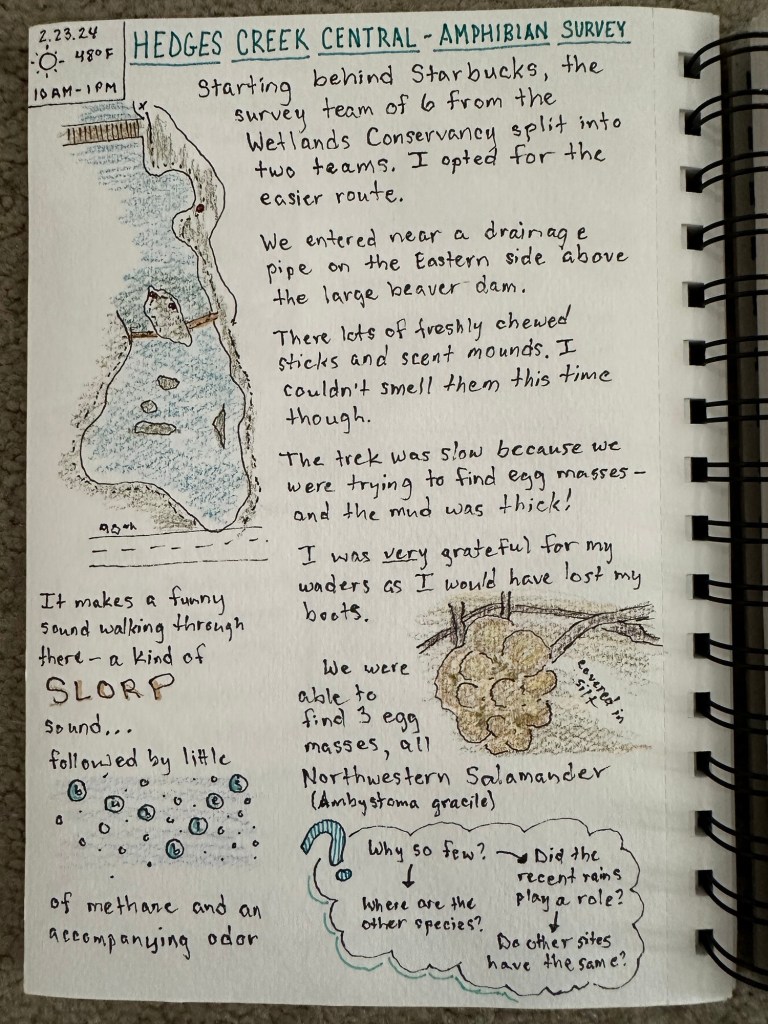
3. Wetlands help store carbon – If you have ever taken a walk through a wetland, particularly on a warm summer day, you may have encountered evidence of this function. The rushes, sedges, and grasses help to trap carbon in their structures. When these eventually break down, much of the carbon is then stored in the soils of the wetlands though small amounts of methane can bubble out when disturbed when you walk through this habitat. These gases can give wetlands a rather distinctive odor. But this process of trapping carbon means that it is kept out of the atmosphere and thus less likely to further climate change. In fact, in tropical settings, wetlands may be three to five times more effective at storing carbon than the same area of tropical forest (NOAA).

Reason #2: Wetlands help prevent flooding

I know what you might be thinking – how can an area that is wet help prevent flooding? This is another way that wetlands ability to store water comes in handy. Think of a wetland like a sponge… when dry it is able to soak up large quantities of water and hold it. Sure a little might leak out into surrounding areas, but nowhere near the amount of water that otherwise would have without the absorbent landscape. For seasonal wetlands this is especially true, they are designed to soak up water during the wet winter and spring months, but are often dry during summer and early fall.

The water slowed down by wetlands also has more time to be absorbed. When wetlands are adjacent to rivers and streams, this slower movement helps it stay connected to areas that are better equipped to handle seasonal floods as was mentioned above. And who doesn’t love cleaner water?

Reason #3: Wetlands provide essential habitat

So this is the one that probably draws most people in… ESPECIALLY if they are birders. If you want to see some amazing wildlife, wetlands are probably a great place to start. Dominated by grasses, sedges, reeds, rushes, and trees like willows, these landscapes provide food and shelter for a lot of incredible species. Below are just a few of my local favorites:

1. Beavers – As an Oregonian, I feel like I have to start with our state animal. Best known for their dark chocolate brown coats, flat paddle-like tails, and bright orange teeth, these mammals are often the engineers of wetlands. While you might think of beavers gnawing their way through large trees that then come crashing down, most often they will remove lower branches or gnaw through parts of trees to get to the nutrient-rich cambium which they eat. Additionally, they will help new willows sprout so that they have access to a continuous food source. On walks around area wetlands, it is often much easier to find evidence like these.

Beaver are also often associated with the images of the dams and lodges they use to modify the environment around them. These mammals prefer water that is deep enough to create underwater entrances to their lodges – to avoid predators- but not too deep. When beavers move in and create a dam, it creates differences in water levels and often leads to some localized flooding. But this also means that the water slows down, leading to a build up of sediments. As these particles fill in the waterway, they can lead to prairies and eventually forests, making them a key part of local ecological succession. Their dams and lodges also help provide eventual shelter for a number of birds and other animals with which they have co-evolved.

Beaver are however crepuscular, meaning they are most active near dawn and dusk. There is evidence that this behavior is in response to avoiding humans or other predators as beaver in some areas with less predation are more active throughout the day. This means if you see a dark furry creature swimming around in the middle of the day, it is more likely a nutria or muskrat, which are often smaller and have skinny tails and light whiskers around their face.

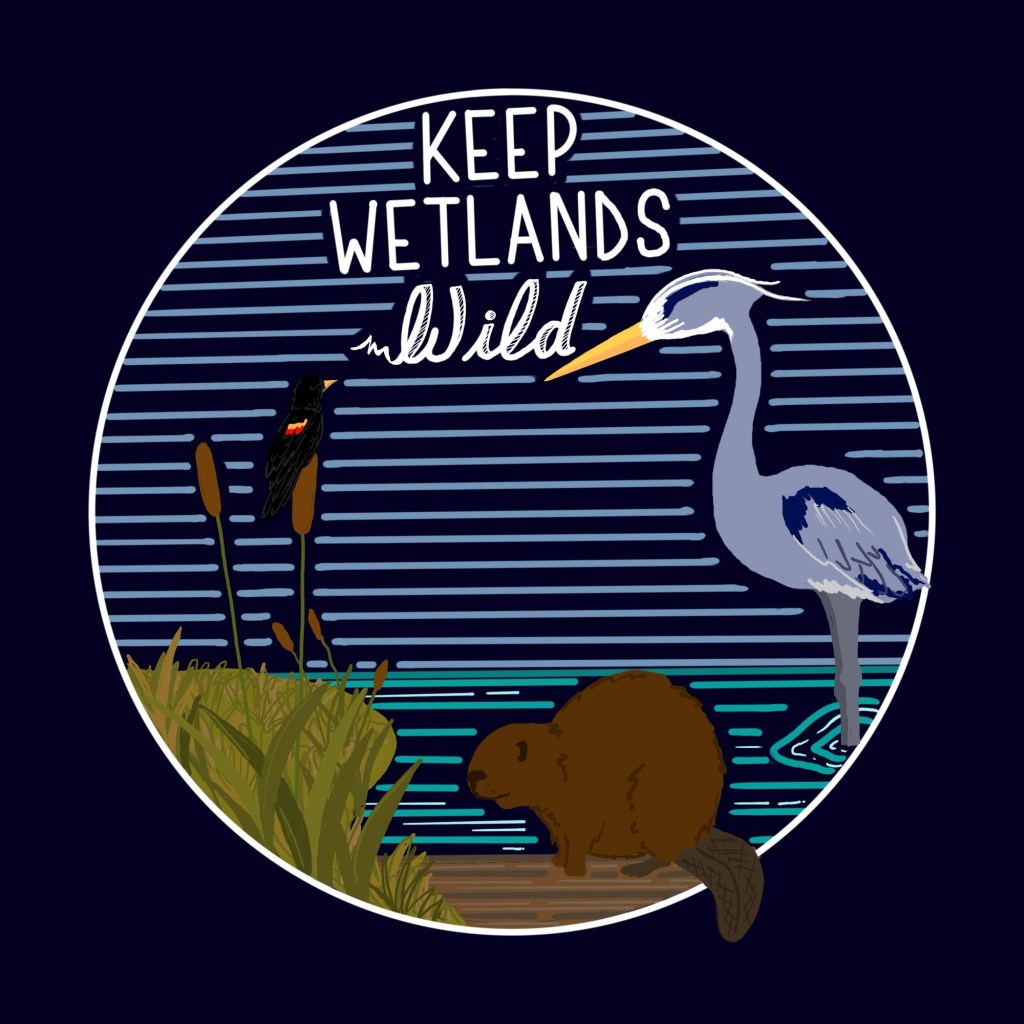
2. Birds – Yes, I know it’s not a specific species, but the birding in and around wetlands is phenomenal. Watching a Great Blue Heron wade through the shallows in search of small fish or minnows very much makes think of what it must have been like to watch a dinosaur hunt. Or listening for the distinctive calls of Red-Winged Blackbirds or Belted Kingfishers while searching for that flash of red or blue.

Wetlands are also a great place to work on your life list as a birder. Many species make their home there year-round, but you’re also likely to catch a glimpse of migratory species as well. During a visit to the wetlands on Sauvie Island outside of Portland, I was able to see two new species: the Tundra Swan and Sandhill Crane. You can likewise watch a lot of fun bird behaviors, from nesting to foraging and everything in between, from larger birds like ducks and geese.

3. Rough-Skinned Newt – I love waiting for these little ones to become more active and move from the forest to the water. A rich brown topside, but with bright orange tummies, these salamanders are incredibly cute and much easier to find that many other local amphibians. Their coloration does make it easier for them to hide among damp brush, so you have to watch you step while in areas where they are active. They rely a lot on forests that are kept adequately moist throughout the year.

They often return to ponds or wetlands during March or April to mate and you might be luck enough to stumble upon a newt ball during these times. During their larval stage, they have gills that make them resemble darker hued axolotls.

But what many people know about the rough-skinned newt is that they are poisonous. They are able to secrete a tetrodotoxin in their skin, which allows them to avoid most predators. One notable exception is the common garter snake which has evolved a resistance to the toxin. And likely why you often see them in nearby habitats. When threatened, the newt while raise its head towards its tail, showing its bright orange belly. For these reasons (and generally respecting wild animals), it is a good idea to avoid handling rough-skinned newts and making sure to thoroughly wash your hands after doing so.

We Need Wetlands…And They Need Us Too

While it is very obvious that we and many others we share the planet with rely on wetlands, they need us too. In 2023, nearly half of previously protected wetlands in the United States lost that status under the Clean Water Act. These magical habitats need our protection now more than ever. And in the face of climate change, we might need them more than ever too. So this World Wetland Day, I encourage you to do you part: learn more about wetlands near you, help advocate for their protection, or support or volunteer with an organization helping to protect them and give wetlands a voice.
Getting Started With Nature Journaling – Part 5: Sketching It Out and Drawing It In

Hello and welcome back for Part 5 in our series about getting started with your nature journaling practice! For previous posts and other resources, click here.

Now we finally find ourselves at the entry about drawing. Before we dive into technique, I want to recap a few key ideas:

1. Nature Journaling is MORE THAN a pretty picture – When we nature journal, it is more than just a drawing. Words and numbers play a key role in communicating out observations and the connections we are making with the world around us.

2. Pencil Miles make a BIG difference – Practice may not make perfect, but it certainly makes us better. With drawing (or anything else), the more you do it, the more comfortable you become. In the nature journaling community, John Muir Laws and many others often use the term “pencil miles” to describe this idea.

3. You don’t need fancy resources – To nature journal, you really only need three things: paper, something to write with, and a nature nook to observe. In a future post, I will share the resources I use to journal in the field and why, but when you’re starting out it is best to keep it simple. Plus you can always add on later.

Ways to Add Drawing To Your Nature Journal

Now depending on where you are in your nature journaling practice or even what your schedule allows, there are different ways to add drawings to your nature journal page. So here are a few fun ones to try out.

Quick Sketch

Maybe you don’t have much time (pencil inches are better than no pencil time at all!) or maybe the thing you are trying to capture is on the move like a bird. Either way, it is ok to just include a sketch that shows key features like size, shape, or color. You can always add more detail later (see below) or it gives you a chance to at least capture something about what you have seen. I often use this strategy when sketching on a break from work or if the conditions outside are a bit rough. I do often take the time to record specific details in writing or with numbers, knowing I can always adjust the drawing later.

Detailed Drawing

When you have more time or perhaps are working from a reference photo, a detailed drawing can add a lot more to your journal entry. When you take the time to look closely at what you are drawing, you notice more. When you notice more, it leads to new and interesting observations and connections. You are more present in your environment and more likely to notice other fun things around you. Those details can also be more helpful if you are trying to identify something you have seen. For example, if you are drawing a leaf, characteristics like shape, arrangement, vein pattern, and edges can all provide valuable information that helps you tell one species from another.

Map

This can be a fun way to include a drawing in your journal. It might show the path you took on a short hike or a longer road trip. Either way, it can help you connect the other information on the page with data about where you saw it. It can even be used with a number or color code to connect words or numbers on your page more clearly. This is a strategy I admittedly have not used much, but hope to use more in the future.

Other strategies to remember

As you begin to draw more as part of your nature journaling practice, here are a few more helpful hints.

1. Look for shapes – Circles, triangles, rectangles… a lot of the things we observe in nature are rooted in basic shapes. For example, when drawing a bird, it can be helpful to use ovals to sketch out the head, body, and upper part of the wing.

2. Use your pencil/hand to measure – Using your pencil or hand to get a sense of proportion (how big one thing is relative to another) can be useful when trying to add depth or perspective to your drawing. It also gives you a sense of how each part should be scaled – how much of the tree trunk is exposed before the branches start? How far do they reach out from the tree? What is the distance between root and crown? Obviously taking precise measurements when possible will always give you more accurate information.

3. Start with light pencil – When you are drawing/sketching, it can always be nice to start with light pencil strokes. First, because they are easier to erase when you need to make a change. But they also allow you to get a sense of the shape in a more general and loose way. While any pencil will do, I like using my Prismacolor Col-Erase Non-Photo Blue pencil for initial sketches whenever possible for exactly the reasons I mentioned.

What’s Next?

So now we’ve talked about the general features of a nature journal and finding a place to observe, but how do we start setting up our page? In our next post, we’ll talk all about the wonderful world of metadata – what it is and why you should include it as part of your nature journal practice.

Until then, happy journaling!

Getting Started With Nature Journaling – Part 4: Beyond Measure (Numbers)

Welcome back for Part 4 in our series about nature journaling! Now we’ve talked about finding a space and adding writing to your practice. But today’s topic is one that is near and dear to my heart as a math/science teacher for nine years – NUMBERS!

Math in Nature Journaling?

Before we go much further, I want you to pause and think about the age-old question every student wondered about while sitting and learning about geometry, statistics, and algebra – When am I EVER going to use this? And while we might use some of those skills more often than others depending on our area of work, nature journaling does provide us the chance to stretch our mathematical muscles and practice. But how might we include numbers as part of a nature journal?

Count Me In!

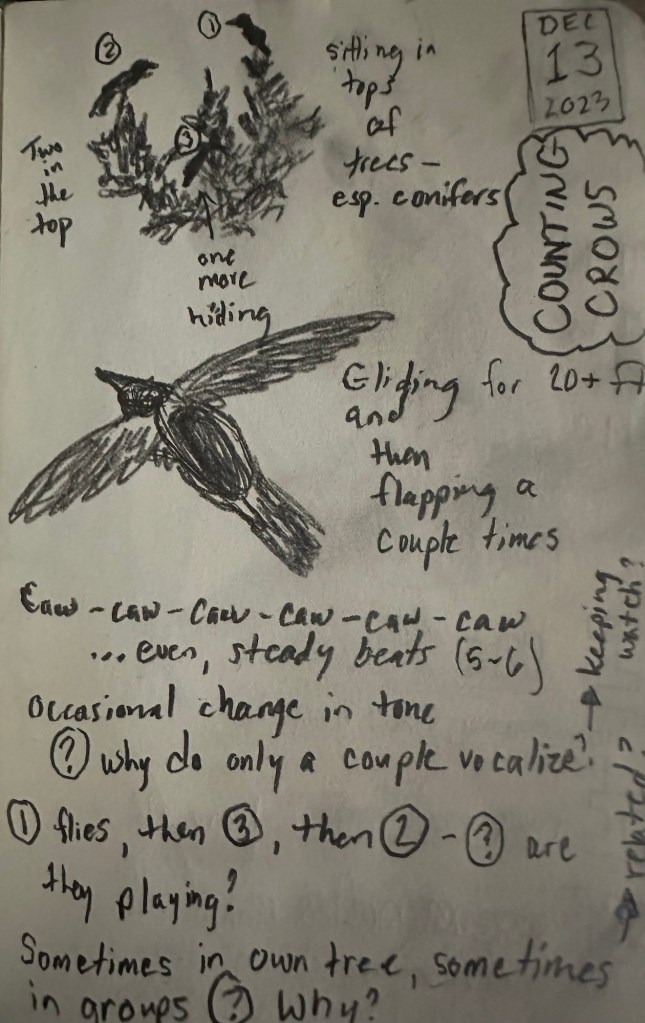
One of the easiest ways to add numbers to your nature journal is to count something that you are observing – The number of birds… how many of a particular plant you can find… the possibilities are limitless! In fact, this can be a great on-going project for you to journal about when visiting your nature nook and allow you to track changes seasonally through the year. There are also ways to collect data like this as part of a group, like a the Great Backyard Bird Count each February.

Measured Approach

Another easy way to add numbers to your journal is to measure something that you are observing. You can estimate for objects that are difficult to capture details on (like a bird for example), but the more accurate, the better. This would require a tool, like the naturalist page from John Muir Laws or other tools, like:

1. Tape measure/Ruler – You can measure length, width, height, circumference, and more. I tend to prefer one that is flexible, though I sometimes carry a small business card sized one in the field.

2. Protractor – You can measure angles

3. Stopwatch/Clock – Measuring time can also be helpful -whether it is part of metadata or the amount of time a muskrat dives under the water, time can provide valuable information

Visualize It

There are several ways to show numbers and relationships visually.

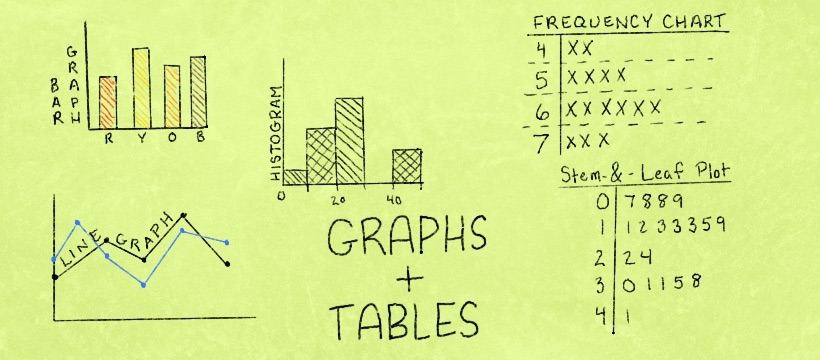
1. Table/Chart – a table or chart can be especially helpful if you are counting as part of your journaling. You can use tallies or write the total number depending on your style.

2. Graph – whether it is a bar graph (categories of data – like type of tree observed), histogram (frequency of ranges of numbers – like the heights of trees), or line graph (often change in something over time) or another form, graphs can help us see connections we might otherwise miss.

3. Stem-and-Leaf Plot – this is a form you may not have used since you were a student, but it can also help us see relationships within our data that might otherwise be missed.

Note that you can also add some fun details to tables and graphs with fonts, titles color, or pattern.

Citizen Scientist

If you are open to sharing your journaling with others, you can become part of the network of citizen scientists who share their data with others so everyone can learn from it. Data or information collected can be shared to platforms like eBird and iNaturalist for your fellow community members to learn from. You can also share your entry with fellow nature journalers.

Numbers, Now What?

Adding numbers adds some much needed detail to our work. Sometimes they are woven into the written parts of our entries, other times we might display them separately. Either way, when combined with words and pictures, they add helpful information for us and anyone we share it with. So next, let’s talk about the pictures and how they bring our journal entries together.